What a Year-Long Research Exchange Can Teach Us About Global Health Partnerships
Some of the most valuable outcomes of international research collaboration never show up in a paper. They show up in the relationships, skills, and shared understanding that researchers carry with them long after a project ends.
That’s the story behind Daiana (Dai) Santos de Oliveira’s exchange between Fiocruz in Brazil and the Environmental Health Group (EHG) at the London School of Hygiene & Tropical Medicine (LSHTM). Dai, a postdoctoral researcher at Fiocruz’s Instituto de Saúde Coletiva, spent from spring to Christmas last year embedded with the EHG as part of the two institutions’ ongoing partnership. What she came away with says a lot about what long-term research exchanges can offer, if institutions commit to them properly.
A lab skill, and a bigger lesson
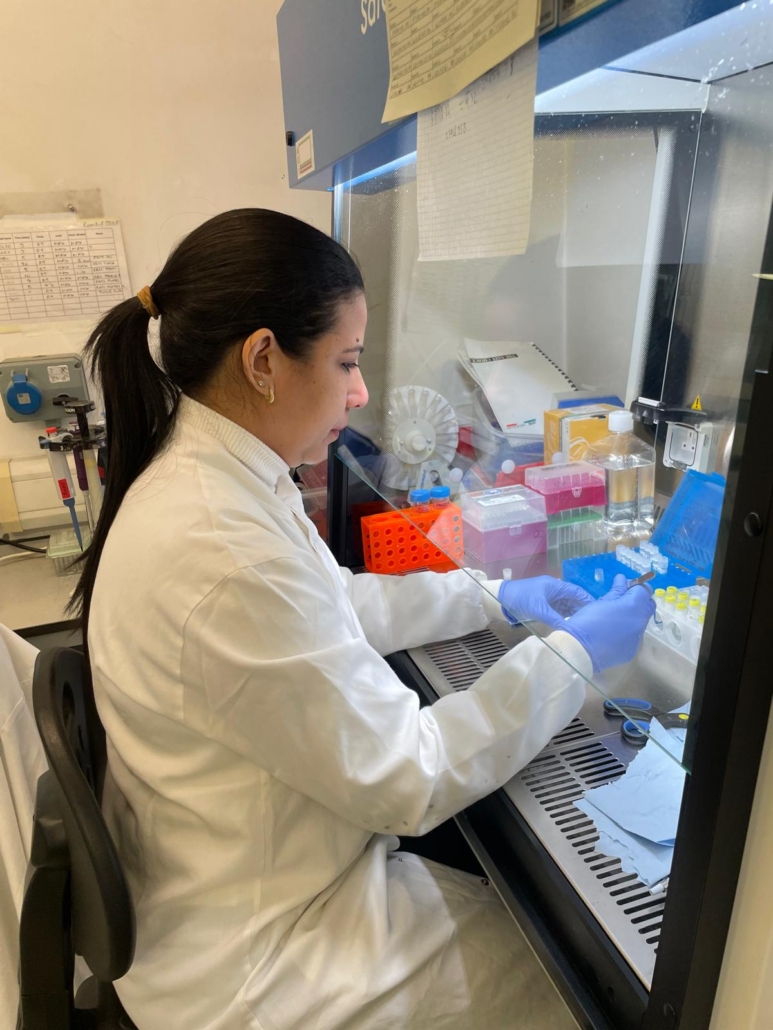
On paper, the technical outcomes are easy to list. Dai trained on the TaqMan Array Card (TAC), sharpening her molecular biology skills for studying enteric pathogens. She worked hands-on with nucleic acid extraction across sample types, from stool to environmental filter papers, and built her experience with qPCR techniques. These are concrete, transferable skills she’s now applying directly in her research at Fiocruz.
But Dai is clear that the technical training was only part of what made the exchange valuable. Sitting in on EHG seminars and residential retreats exposed her to a different way of doing global health research, one where laboratory findings are constantly being tested against social and environmental realities. As she puts it:
“My experience at LSHTM was extremely enriching, both academically and personally. Being part of a diverse and interdisciplinary group provided a stimulating environment for exchange, learning, and reflection on key global health challenges. I had the opportunity to develop new technical skills, strengthen collaborations, and broaden my research perspectives. This experience also reinforced the importance of international partnerships and continues to influence my work and collaborations after returning to Brazil.”
Why exchanges like this matter for institutions, not just individuals
It would be easy to treat this as an individual success story, and it is one. But the ripple effects reach further. Since returning to Brazil, Dai has been applying what she learned directly to her Fiocruz studies and sharing it with colleagues, extending the exchange’s value well past her own desk.
Her Fiocruz collaborators see it the same way. Federico Costa, Principal Investigator at Fiocruz, reflects:
“The exchange was an important opportunity to strengthen collaboration between the institutions and open new pathways for joint projects. The experience contributed to expanding scientific dialogue and consolidating strategic partnerships.”
Co-Investigator Mitermayer Reis frames it as proof of something bigger:
“Participation in the exchange reinforces Fiocruz’s commitment to international cooperation and demonstrates the value of exchanging experiences for advancing research and innovation.”
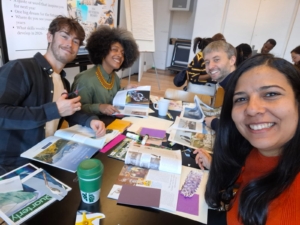
On the LSHTM side, Dr Jacqueline Knee, who leads the joint Fiocruz-LSHTM project, points to something less often measured: how fully Dai integrated into the wider EHG community, not just the project team she was assigned to.
“It was such a pleasure having Dai join our group at LSHTM last year. Not only did she achieve all of her professional goals related to our joint project, but her commitment to fully integrate into our wider research group, the Environmental Health Group, allowed her to form strong ties with researchers outside of our project team. I am confident her visit strengthened our partnership, and I hope to continue to work with Daiana and the wider Fiocruz team for many years to come.”
The takeaway
Research partnerships can often be judged by outputs, papers published, methods transferred, datasets shared. Dai’s exchange delivered on all of that. But what stands out most is harder to put a number on: a researcher who left with new technical skills, a stronger professional network, and a genuinely different way of thinking about how lab science connects to the people it’s meant to serve.
That’s what a well-supported exchange looks like. And it’s exactly the kind of collaboration RGHI is proud to help make possible.
With thanks to Daiana Santos de Oliveira, Federico Costa, Mitermayer Reis, and Dr Jacqueline Knee for their contributions to this post.
 Malaysian street food on display by jandrielombard (iStock Content Licence Agreement https://www.istockphoto.com/legal/license-agreement)